
- About Us
- Practice Areas
- News
- FAQs
- Testimonials
- Contact
Most people hear “DUI” and immediately think alcohol. But in Florida, a DUI can also be based on controlled substances or chemical substances, including marijuana, prescription medication, and even certain over-the-counter drugs if they impair your normal faculties. In other words, you do not have to be drunk to be arrested for impaired driving, and you do not get a free pass just because the substance was legally prescribed to you. Florida law focuses on whether the State can prove that the substance affected you enough to impair your ability to drive safely.
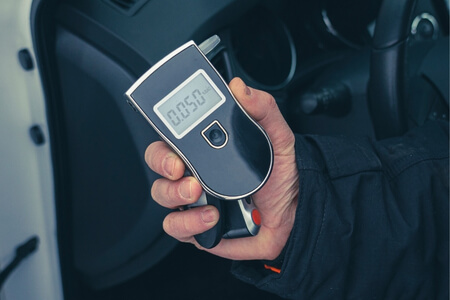
That distinction matters because drug DUI cases are often more complicated than alcohol DUI cases. In an alcohol case, prosecutors usually lean heavily on a breath reading and the familiar 0.08 standard. In a drug DUI case, the State often has to build the case a different way. Officers may point to driving behavior, physical appearance, field sobriety exercises, statements made during the stop, urine or blood testing, and sometimes the opinions of specially trained officers. That means these cases are frequently more subjective, more technical, and more open to challenge than many people realize. Bruce H. Denson P.A. regularly handles DUI defense matters in Florida and knows that what looks straightforward in a police report can become much less certain once the evidence is closely examined.
One of the biggest misconceptions in these cases is that prescription medication somehow makes the situation legally safer. It does not. Florida’s DUI law does not say the drug has to be illegal. If a driver takes pain medication, anti-anxiety medication, sleep medication, ADHD medication, muscle relaxers, or another drug that affects alertness, coordination, judgment, or reaction time, that driver can still be arrested if law enforcement believes the person’s normal faculties were impaired. Even medications taken exactly as prescribed can become an issue when they cause drowsiness, slowed responses, confusion, or dangerous interactions with alcohol or other drugs. That is one reason federal safety agencies continue to warn drivers that prescription and over-the-counter medicines can lead to DUI exposure if they impair driving.
Marijuana creates its own set of legal problems. Florida still does not allow recreational marijuana under current state law, although medical marijuana is legal for qualified patients through the state’s Medical Marijuana Use Registry. But even a person who uses marijuana lawfully for medical reasons can still face a DUI arrest if an officer believes the person was driving while impaired. A registry card or physician recommendation is not a shield against a DUID charge. The issue in court is not whether the marijuana was lawfully obtained. The issue is whether the prosecution can prove impairment at the time of driving. Bruce’s own recent content on Florida marijuana laws makes that broader point clear: legality of possession and legality of driving are two different questions.
This is also where marijuana DUI cases often become more defensible than people expect. Florida law does not create a clear THC number that automatically proves impairment in the same way a high alcohol reading can create a presumption in an alcohol-based DUI. Instead, prosecutors usually have to connect the presence of marijuana to actual impaired driving. That gap matters because THC can remain detectable after the most impairing effects are gone, and the science is not nearly as neat as a standard alcohol breath test. In practice, that often means the State has to rely on a combination of officer observations, field exercises, test results, and circumstantial evidence rather than one simple number.
So how are these cases actually proven? Usually, they begin with the stop itself. An officer may claim the driver was weaving, braking erratically, driving too slowly, drifting out of the lane, or reacting unusually at a traffic signal. From there, the officer may describe bloodshot eyes, delayed speech, confusion, unusual body movements, difficulty following directions, or an admission about recent drug use. In many reports, the prosecution tries to turn a series of small observations into a larger story about impairment. The problem is that many of those observations can have explanations that have nothing to do with criminal intoxication, including fatigue, anxiety, medical conditions, injuries, stress, or simple nervousness during a roadside stop.
Field sobriety exercises are another major part of the State’s case, but they are not foolproof. In drug-related cases, especially, officers often treat awkward balance, hesitation, or inconsistent performance as signs of impairment. But roadside exercises can be affected by age, footwear, weather, lighting, physical limitations, prior injuries, neurological conditions, and the stress of being investigated. If the officer did not explain the exercises properly, rushed the process, or ignored factors that could affect performance, the reliability of those observations can be challenged later. That is one reason a defense lawyer will often review body camera footage and compare what the video actually shows against what the report claims.
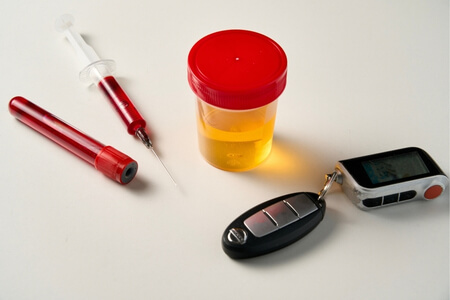
Chemical testing in DUID cases is different from what many people expect. In alcohol cases, most people think about a breath test. In suspected drug-impaired driving cases, Florida’s implied consent law allows officers, after a lawful arrest and with reasonable cause, to request a urine test to detect chemical substances or controlled substances. The same statute also addresses certain blood-testing situations, including circumstances where a person appears at a medical facility, and a breath or urine test is impractical or impossible. Refusal can trigger license consequences, and refusal evidence can be used in a criminal proceeding.
If the case involves a crash with death or serious bodily injury, the rules get even more serious. Under Florida Statute 316.1933, officers who have probable cause to believe an impaired driver caused death or serious bodily injury can require a blood test, and the statute expressly allows reasonable force if necessary. Those are high-stakes cases, and the blood draw, chain of custody, handling procedures, and medical evidence all become critical parts of the defense analysis.
Another issue people overlook is the driver’s license side of the case. A DUI arrest in Florida can trigger an immediate administrative problem separate from the criminal court case. The Florida Department of Highway Safety and Motor Vehicles explains that refusals to submit to breath, urine, or blood testing are admissible in criminal proceedings and that refusal can also lead to license suspension consequences. In many cases, people focus so much on the criminal charge that they miss how fast the driving-privilege issue moves. That is why anyone arrested for a drug DUI should also look closely at Bruce’s resources on a license suspension after a DUI and how a hardship license in Florida may fit into the bigger picture.
What makes these cases especially frustrating is that a positive test result does not always answer the most important question: Were you actually impaired while driving? A lab result may show that a substance was present, but presence is not always the same thing as impairment. With marijuana, that issue is obvious. With prescription drugs, the issue can be just as important. Timing, dosage, tolerance, cross-reactivity, the difference between active ingredients and inactive metabolites, and the way the sample was collected and stored can all affect how persuasive that evidence really is. In some cases, the prosecution’s “proof” is not nearly as strong as it first appears.
That is why the defense in a Florida DUID case is often about details. Was the stop legal? Did the officer actually observe real impairment, or just unusual behavior? Were the field sobriety exercises fairly administered? Was a Drug Recognition Expert involved, and if so, how solid was that evaluation? Was the testing method appropriate for the suspected substance? Was the sample collected, preserved, and analyzed properly? Did the State confuse lawful use with impaired use? These are not technical side issues. In many DUID cases, they are the case.
For people arrested after using marijuana, one hard truth is that “I have a card” is not a complete defense. For people arrested after taking prescription medication, “it was prescribed to me” is not a complete defense either. But the opposite is also true: an arrest does not mean the State can prove guilt beyond a reasonable doubt. Drug DUI cases often depend on assumptions, interpretation, and incomplete science. That gives the defense meaningful room to challenge the State’s narrative and force the prosecution to prove more than suspicion.
If you were arrested for a drug DUI in St. Petersburg or anywhere in Pinellas County, the smartest move is to act quickly before the evidence hardens against you. Body camera footage, dispatch records, officer reports, testing records, and license-suspension deadlines all matter early. Bruce H. Denson P.A. represents people facing first-time DUI charges, drug charges, and related Florida criminal cases, and can help you understand both the criminal case and the driver’s license consequences. To discuss what happened and what defenses may apply, contact Bruce H. Denson P.A. for a confidential consultation.
In Florida, a DUI is not limited to alcohol. The law also covers driving while under the influence of a controlled substance or chemical substance when your normal faculties are impaired, which means a person can face a DUI charge even if the drug was legally prescribed. The core issue is not whether the medication was lawfully obtained, but whether prosecutors can prove it affected the person’s ability to drive safely.
A person can be charged with DUI in Florida if marijuana allegedly impaired their normal faculties while driving. That can apply whether the marijuana was used illegally or through Florida’s medical marijuana program, because lawful medical use does not create an exception to the DUI statute. In these cases, the prosecution still has to prove actual impairment at the time of driving.
Drug DUI cases in Florida are usually proven through a combination of evidence rather than one simple number. Prosecutors may rely on the reason for the traffic stop, the officer’s observations, statements made by the driver, field sobriety exercises, and urine or blood testing, depending on the circumstances. Under Florida’s implied consent law, a lawfully arrested driver can be required to submit to a urine test for suspected chemical substances or controlled substances, and a refusal can be used in a criminal proceeding.

© 2026 The Denson Firm. All rights reserved.