
- About Us
- Practice Areas
- News
- FAQs
- Testimonials
- Contact
As a gun owner, prospective gun owner, or someone facing a firearm-related charge, it is important to understand how gun laws in Florida actually work in practice. Florida law covers firearm purchases, concealed carry, open carry restrictions, private-property exceptions, red flag orders, and self-defense issues. The law also changes, which is why outdated assumptions can create serious legal problems.
One of the most common points of confusion is the difference between open carry and permitless concealed carry. Florida now allows qualifying adults to carry a concealed firearm without a license in many situations, but that does not mean Florida is an open carry state. That distinction matters.If you are under investigation, arrested, or unsure whether your conduct violated Florida weapons laws, speaking with an experienced Florida weapons charges attorney as early as possible can help protect your rights.
Florida allows lawful firearm ownership in many circumstances, but that does not mean the state has no restrictions. In general, Florida does not require a permit simply to purchase a firearm, but buyers must still pass a background check, and some purchases are subject to a waiting period. Florida law also restricts who may possess firearms, where firearms may be carried, and when certain conduct can lead to criminal charges.
For many readers, the most important takeaway is this:
That is why people searching for “Florida gun laws,” “Florida open carry law,” or “Florida gun laws on private property” often need more than a broad summary. They need to know which rule applies to their exact situation.
No. Florida is not an open carry state. In most situations, openly carrying a firearm on or about your person is unlawful under Florida law. That is true even though Florida now allows permitless concealed carry for qualifying adults. Open carry and concealed carry are not the same thing, and many people get into legal trouble by assuming they are.
This distinction is one of the most important parts of understanding Florida's open carry laws. A person may believe they are acting lawfully because they own the firearm or could legally carry it concealed, but the way the firearm is carried still matters.
There are, however, narrow exceptions. Those exceptions are where many of the most common questions arise.
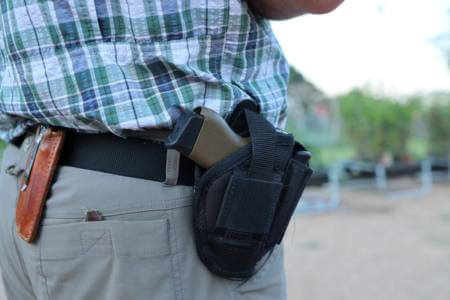
Under Florida law, open carry is generally prohibited, but there are limited exceptions. In certain situations, a person may openly carry a firearm lawfully, including:
Even here, the details matter. A lawful exception in one setting does not automatically carry over into another. A firearm that may be lawful to openly carry on private property may become a criminal issue the moment the person leaves that property or otherwise falls outside the exception.
Because of that, anyone searching for open carry law in Florida should focus less on broad slogans and more on whether a specific statutory exception actually applies.
One of the most common questions is: Can you open carry on your property in Florida?
In general, Florida law allows a person to openly carry a firearm on their own private property. That is one of the clearest exceptions to Florida’s open carry restriction. But that does not mean every person on the property has the same right, and it does not mean the rule applies once the person steps off that property.
Important points to understand include:
If your case involves a dispute about where the firearm was carried, whether the property exception applied, or whether law enforcement overreached, those details can become the core of the defense.
As of July 1, 2023, Florida allows qualifying adults to carry a concealed firearm without obtaining a concealed weapons license. This is commonly called permitless carry or constitutional carry, though Florida’s law still includes eligibility requirements and location-based restrictions.
What permitless carry does not do is make open carry legal. That misunderstanding is one of the most common sources of confusion for Florida gun owners and one of the reasons this page should clearly separate concealed-carry rules from open-carry rules.
Just because someone may lawfully carry a concealed firearm without a permit does not mean they can openly carry that same firearm in public. That difference can be the line between lawful conduct and a criminal charge.
Florida’s permitless carry law does not allow just anyone to carry a concealed firearm. A person must still meet the legal qualifications that would otherwise apply, and certain people remain prohibited from lawfully carrying or possessing firearms.
Readers should understand that “permitless” does not mean “restriction-free.” Age requirements, criminal-history issues, injunctions, disqualifying conditions, and location-based restrictions can still affect whether carrying is lawful.
If your concern involves a prior felony, a possession ban, or whether your record affects your gun rights, review Felons, Firearms, & Pinellas County for a more specific discussion of how firearm-possession issues can arise in criminal cases.
Even when a person may lawfully possess or carry a firearm, Florida law still restricts carry in certain places. These location-based restrictions are often overlooked and can lead to arrest even when the gun owner believes they are otherwise following the law.
Examples of locations that may be restricted include courthouses, polling places, law enforcement facilities, and other prohibited places under Florida law. The exact restrictions depend on the facts, the type of property involved, and the specific statute at issue.
For a more focused explanation, readers can also review 4 Places You Can’t Carry a Firearm.
Although Florida now allows permitless concealed carry for many qualifying adults, concealed weapons licenses still matter in some situations. A license may offer benefits such as reciprocity with other states and can still be useful for gun owners who travel or want the added documentation that comes with licensure.
This is where many people get confused. They hear that Florida no longer requires a permit for concealed carry and assume that all previous restrictions have disappeared. That is not the case. Eligibility rules still matter. Restricted locations still matter. And open carry remains a separate issue.
A smart way to understand this section is to keep three ideas separate:
That structure makes the law easier to understand and helps avoid the kind of misunderstanding that can lead to serious criminal exposure.

Florida’s red flag law allows law enforcement to seek a Risk Protection Order in cases where someone is alleged to pose a significant danger to themselves or others. If granted, that order can temporarily restrict firearm access and carry serious consequences for the person involved.
These cases can move quickly, and people are often caught off guard by how much a Risk Protection Order can affect their rights, daily life, and future firearm possession issues.For a more complete explanation of how these cases work, review Florida Red Flag Gun Laws: Your Rights & Legal Options.
Florida's self-defense law is often discussed alongside firearm law, but the two are not interchangeable. A person may lawfully possess a firearm and still face criminal charges depending on how force was used. Likewise, a self-defense claim depends heavily on the facts, the perceived threat, and whether the force used was legally justified.
Florida’s Stand Your Ground law can apply in some firearm-related cases, but it is not a blanket shield against prosecution. Whether it applies depends on the facts of the encounter and whether the legal requirements are actually met.
For a more detailed discussion, review Stand Your Ground Law in Florida: Explained.
Florida firearm ownership rules also cover who may purchase a firearm, minimum age requirements in many situations, background checks, waiting periods, and disqualifying criminal history. These rules matter because a person can face charges not only for carrying unlawfully, but also for unlawful possession or unlawful transfer.
For most readers, the biggest concern is not simply ownership. It is whether the firearm was carried, stored, displayed, or transported in a way that created criminal risk. That is why understanding the carry laws, restricted locations, and private-property issues is just as important as understanding the purchase process itself.

Some of the most common misunderstandings about gun laws in Florida include:
These misunderstandings are common because Florida gun laws can seem simple at a distance but become much more technical when applied to real-world situations. The facts of where the firearm was located, how it was carried, and what else was happening at the time can make a major difference.
Depending on the facts, violating Florida gun laws can lead to misdemeanor or felony charges, fines, jail exposure, probation, loss of firearm rights, and long-term criminal record consequences. The exact charge often turns on details such as:
If you have been arrested or are being investigated, the safest move is to get legal advice before making statements or assumptions about what the law allows. In many weapons cases, the defense depends on details that are not obvious from the arrest report alone.
If you are facing a weapons charge, a concealed-carry issue, an open-carry allegation, or a dispute involving firearm possession in Florida, early legal advice matters. These cases often turn on technical facts: where the firearm was located, whether an exception applied, whether the stop was lawful, and whether the State can actually prove a violation.The Denson Firm represents people facing serious criminal allegations in Florida, including firearm and weapons-related matters. To learn more about defense options, visit the Weapons Charges Attorney page or contact the firm to request a confidential consultation.
Florida is not a general open carry state. Open carry is usually prohibited unless a narrow statutory exception applies. This is one of the most important things to understand because many people confuse permitless concealed carry with open carry.
In many situations, Florida law allows a person to openly carry a firearm on their own private property, but that exception is limited and does not automatically extend to guests or off-property situations. The facts matter, especially when the property borders public or shared areas.
Florida’s permitless carry law applies to concealed carry for qualifying adults. It does not make open carry broadly legal. A person can still face criminal issues if they assume permitless carry changed Florida’s open carry restrictions.
Problems often arise in restricted locations, in cases involving prior convictions or injunctions, or when a person assumes a private-property or self-defense exception applies when it does not. Even lawful gun ownership does not eliminate the risk of a weapons charge.
You should call a lawyer as soon as possible if you were arrested, questioned by police, served with a Risk Protection Order, accused of unlawful carry, or worried that a firearm-related decision may expose you to charges. Early legal advice can make a difference in how the case is handled.

© 2026 The Denson Firm. All rights reserved.